24K Gold-Plated Earrings
A thin gold layer can follow a very small hoop or a much larger outline. Bubbles Gold, Ribbon Gold and Sleek Hoop Big Gold each specify a 1-micron layer of 24K gold plating over brass, while their dimensions create three different impressions at the ear.
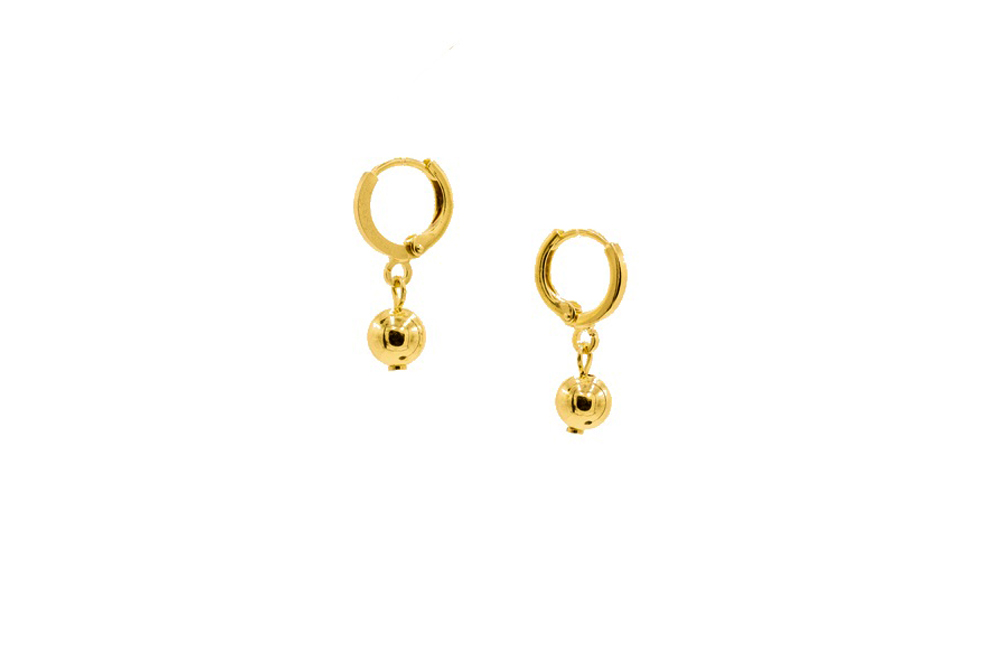
- Bubbles Gold has a 1 cm hoop with a small polished ball pendant.
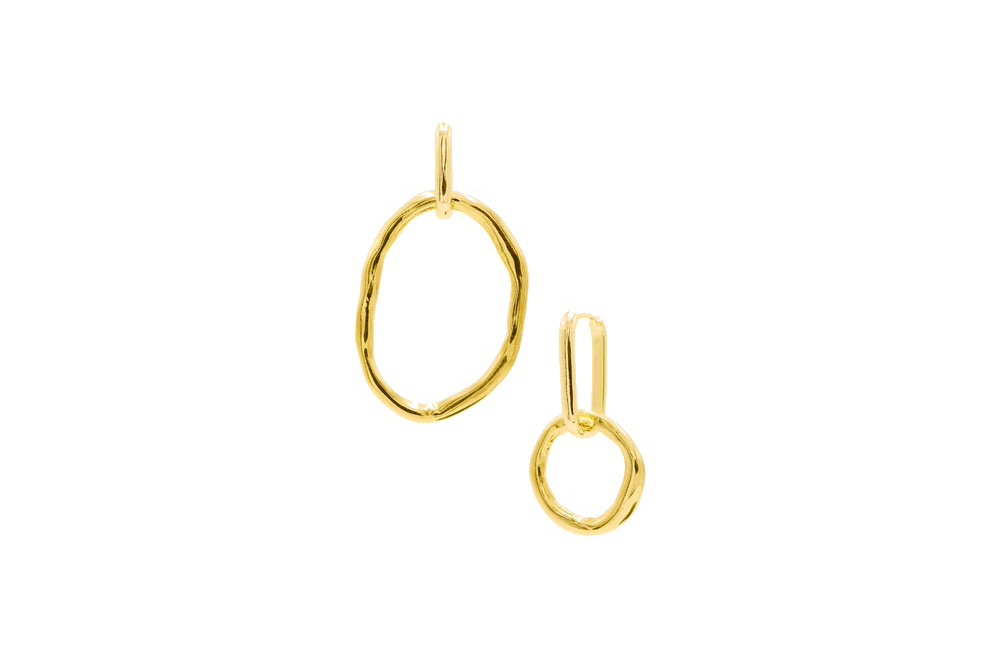
- Ribbon Gold uses an oval design with a listed length of 4 cm.
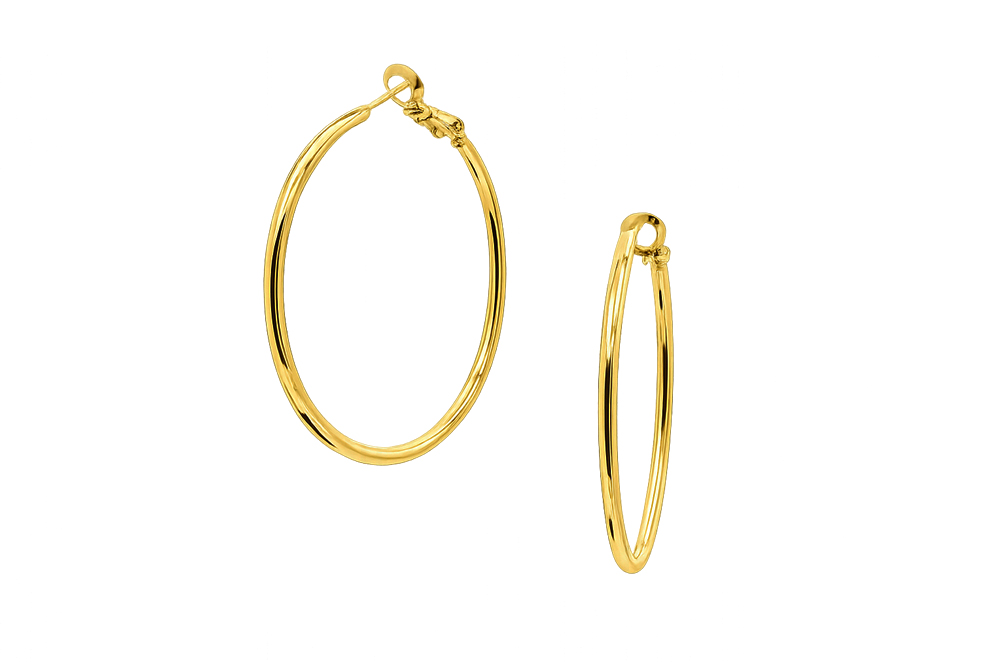
- Sleek Hoop Big Gold measures 5 cm in diameter with a 3 mm rim width.
The coating measurement is not the earring’s physical thickness or its total size. Read it as part of the material specification, then use the dimensions above to judge the amount of visible shape. The drop and dangle earrings selection provides a further comparison when a hanging element, rather than an open circle, is your preferred outline.
24K gold-plated earrings: checking the finish on each component
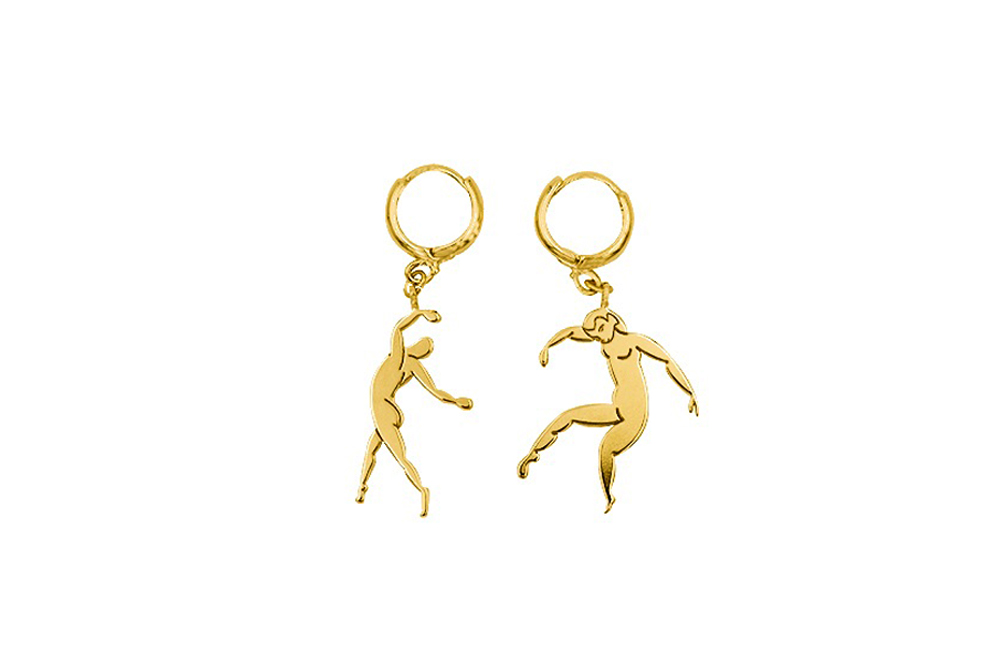
Hope Gold makes that distinction clear. Its dancing figure pendant has 24K gold plating, while the stainless steel hoop has an 18K PVD gold finish. The product lists a 1.3 cm hoop and a 2 cm pendant. Those are separate component measurements; the photograph shows how they connect in the finished piece. The figure offers an identifiable silhouette, whereas the ball on Bubbles keeps the detail compact and abstract.
The same attention to individual components helps when choosing necklaces. Matching the visible gold color does not establish that two pieces use the same underlying metal or finish. Consult the description of each selected item.
Gold-plated earring shapes: balls, ovals, hoops and figures
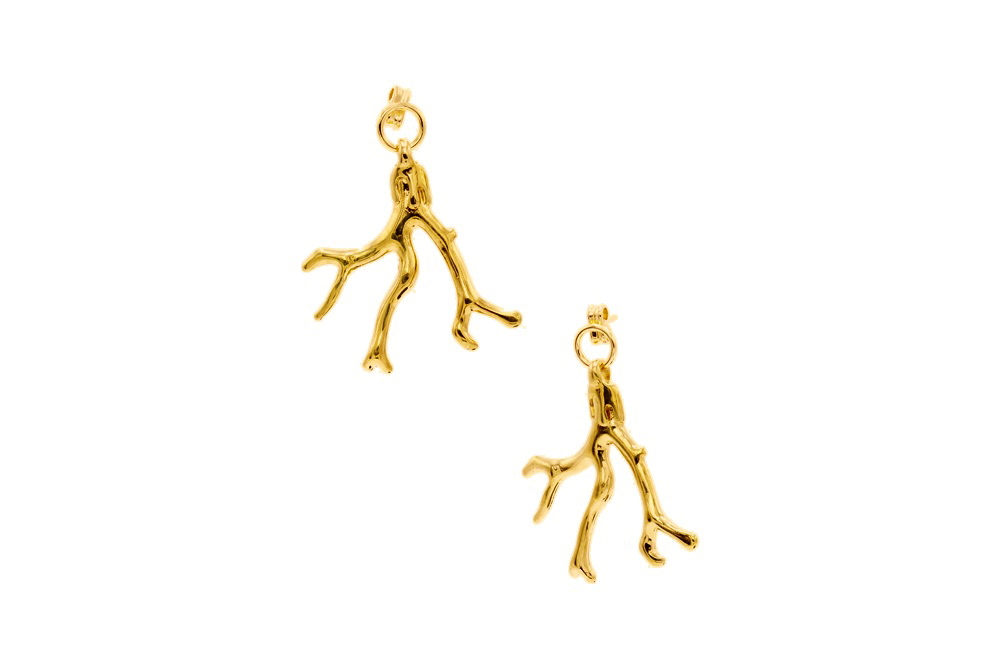
In the earring collection, these named designs let you choose the role of the gold surface: a tiny moving ball, an extended oval, a large circular outline or a recognizable figure. Settle that visual role before comparing the finish details. The plating specification explains the layer on the stated component; the complete photograph explains how much of that component you will see. These two pieces of information should be considered together.

Hope Earrings Gold
 35,00 €
Bubbles Earrings Gold
25,00 €Sleek Hoop Big Earrings Gold
30,00 €Twister Earrings Gold
27,00 €Ribbon Earrings Gold
42,50 €Stream Earrings Gold
37,50 €